
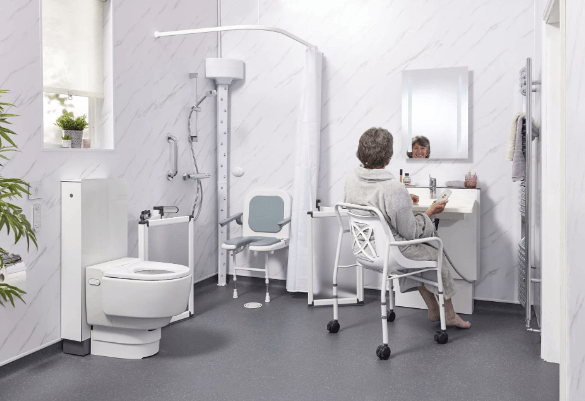
Film tackles bathroom dangers for elderly and disabled. The bathroom is a hazardous place with its hard surfaces, water, and ability to move around. For many falls in the bathroom will result in injury, but for the elderly a fall can result in serious injury or even long-term disability.
The sobering reality of bathroom injuries
Every year over 235,000 people over the age of 15 are treated for injuries sustained in bathroom accidents. 79% of these people are over the age of 65. These accidents can cause very serious injuries, some of which may require long term care. Many of the injuries sustained in bathroom accidents are caused by falls and can result in a number of different injuries, with the most common being fractures. The majority of hip fractures are caused by falls and are difficult to repair as the hip is a weight bearing joint. Most people that suffer a fractured hip will need to remain in bed for a period of time to allow the fracture to heal. This can cause bed sore.
These aren’t minor slips.
Bathroom injuries can result in serious harm to the body and a series of serious fractures. Hip fractures in particular can have a serious effect on a person’s quality of life and cause a long period of time to heal. A person of advanced age can suffer from a variety of problems as a result of their time in bed including bed sores, deconditioning and constipation.
Why bathrooms pose unique risks
A typical bathroom is a slippery place. There is often water present from showers and baths. Soap is often used in the bathroom and this can create a slippery surface. However, soap can also be washed down the plug hole while being used in the bath. As the soap goes down the plug hole it can leave a residue on the bottom of the bath. Later, when the bath is empty this residue can cause the bottom of the bath to be slippery. All this can make a bathroom a very slippery place. In addition to this, the steam from showers and baths can create condensation on mirrors and other surfaces. This can make them slippery as well and reduce visibility.
Many bathroom surfaces are very hard and so are able to cause serious injury in the event of a fall. With most bathrooms being very small, there is little room to fall and then to try and get up. Many elderly people also use a bathtub. Using a bathtub requires great mobility, balance and co-ordination. People with conditions such as arthritis, decreased strength, decreased mobility and decreased coordination often find it very difficult to safely enter and exit the bathtub.
Independence matters more than convenience
Personal hygiene is a fundamental human need and individuals with decreased mobility or safety concerns in relation to using a toilet or bath need to be able to complete these tasks in safety and privacy to maintain their independence and maintain their dignity and continue to live in their own home and retain their independence and avoid moving into residential care or having home care.
Many people would avoid using the bath or toilet if they felt it caused them to be a risk to themselves. In many cases this leads to a number of personal and environmental health problems.
Bathroom safety equipment is available on the market and can aid to keep individuals independent in their own homes for longer. All personal hygiene activities can be undertaken in safety and independence by using the correct disability toilet aids and bathroom equipment.
Safety modifications that actually work
Grab bars are probably the single most effective bathroom safety product on the market today. Grab bars in bathrooms can be fitted around toilets, showers and baths to provide a hand when needed. For people with strong arms and good upper body strength even a slip can be prevented by grabbing hold of a nearby grab bar. To be effective grab bars must be installed into the appropriate wall studding or use suitable anchoring products to hold the users weight.
Non-slip surfaces are another simple way to combat slippery floors. Non-slip mats can be put into bathtubs and showers, and there are a range of non-slip adhesive strips available which can be stuck onto any surface, including tiles and bathtubs made of fiberglass. Some bathroom floors can even be relined with entirely non-slip surfaces.
The same dangers to health caused by poor vision elsewhere in the home can occur in the bathroom. Sufficient and correct permanent lighting, as well as temporary lighting such as motion-activated lights can help to overcome the vision related hazards found in the bathroom.
Using a shower chair or bath bench can help to reduce the amount of physical effort required for someone with mobility problems to use the bath or shower. This can help to enable them to wash independently.
See also: The Rise of Voice Recognition
Toilet safety considerations
Toilet safety frames can also aid individuals who are struggling to transfer to the toilet. Elevated toilet seats increase the height of the toilet seat which decreases the amount of lowering and raising that a person has to do. This can aid people who are very tired or who have been unwell for long periods of time. Elevated toilet seats can also decrease the amount of strain that a person puts on their back when transferring to the toilet. Toilet grab rails also known as safety frames for toilets have sturdy armrests on either side of the frame, which are designed to provide support for people when they are sitting or standing on the toilet. Like grab rails toilet safety frames can be fixed to the wall in your bathroom. When choosing a toilet safety frame, consider how it will look in your bathroom and make sure that it is easy to use. Make sure the area around the toilet is clean and free from clutter and that all products needed for personal hygiene, i.e. toilet paper, are stored in easy to reach places.
Planning for progressive needs
Bathroom safety modifications can need to change frequently as the senior’s needs change as they age. Plan for future safety modifications rather than waiting until time for expensive bathroom renovations. Consider the senior’s ability to use a wheelchair occasionally and plan for their safe use in the bathroom to ensure there is adequate space for movement and use of all bathroom fixtures. Periodically assess the senior’s bathroom for newly developed safety and access problems and take action as necessary to solve them. Small changes in the senior’s habits or physical abilities can create new safety problems that need to be addressed.
It is always advisable to consider how a bathroom could be used by a person using a wheelchair for mobility, even if there is no need for this person to use a wheelchair at present. Modifications to allow use of a wheelchair by a person will affect issues relating to door width, space in the room, and the positioning of fixtures and fittings. As time passes, the risks in a bathroom may increase as the user of the bathroom experiences physical changes, which affect their ability to use the bathroom safely. These changes could be addressed by changes to the bathroom, and by changes to the user’s physical activity. Periodic assessment of the risks of injury in a bathroom will highlight the risks as they occur, and enable the user to take action to address the newly-identified risks.
The cost of simple safety modifications to the bathroom far outweighs the cost of falls and their consequences, including extended periods of time spent in the hospital and in rehabilitation, as well as the loss of independence and transfer of a senior to a nursing home.
