
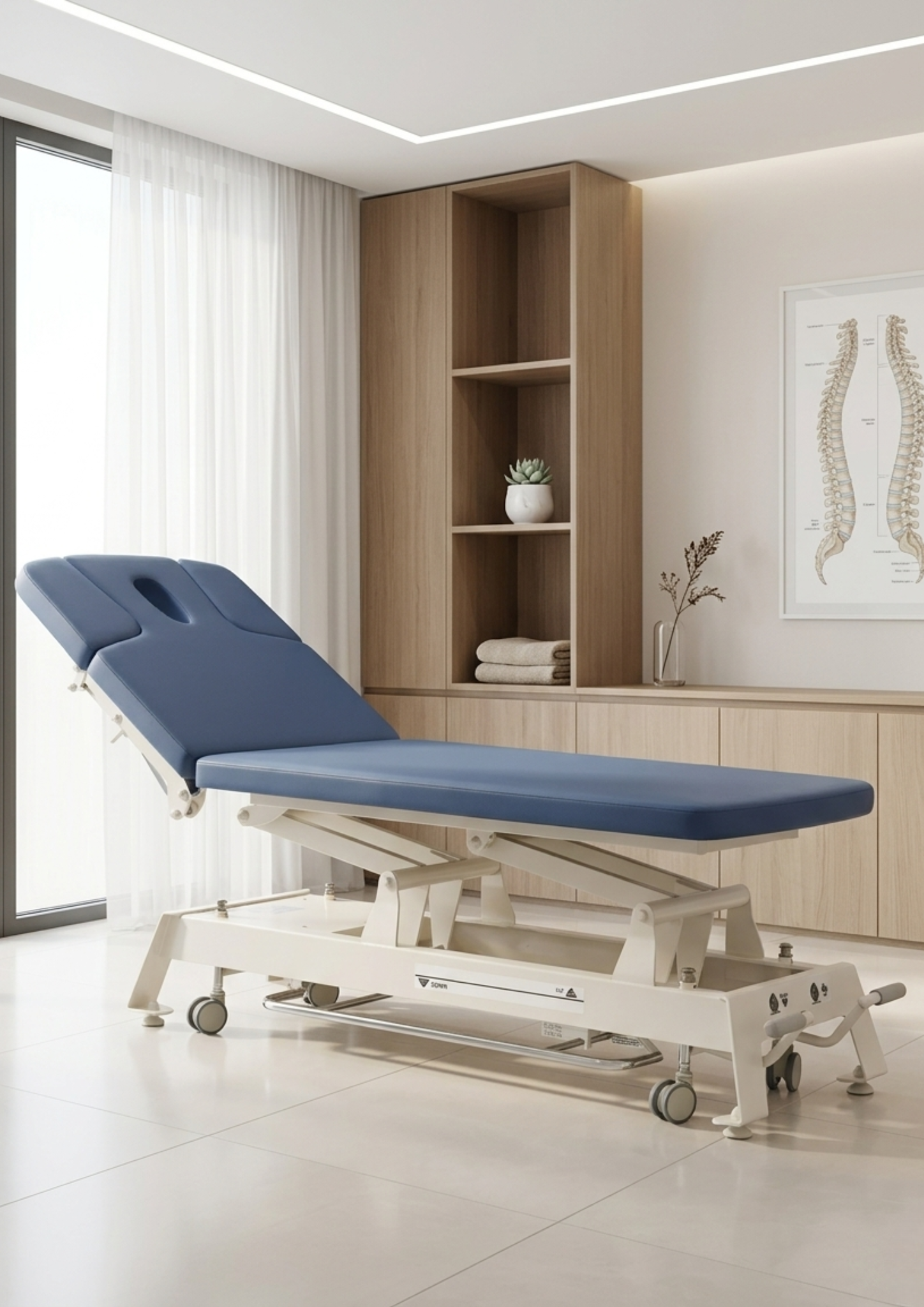
Patient comfort and therapist convenience now shape how well a physiotherapy clinic performs each day. The surface a patient lies on affects positioning, safety, and the quality of every session. Treatment furniture sits at the heart of this. Getting it right influences clinical outcomes and how smoothly a busy practice runs.
Equipment quality decides far more than appearance in a treatment room. Physiotherapy tables built for clinical use give your practice a stable platform for precise treatment, smoother patient handling, and years of dependable service. A weak or unstable surface forces therapists into awkward, compensating movements. The right table removes that strain and lets staff focus fully on each patient and their recovery plan.
When the Treatment Surface Works Against You
Comfort That Holds Through Long Sessions: Patients spend extended periods on a treatment surface during rehabilitation. A thin or sagging top creates pressure points that distract from therapy and slow progress. Firm, well-padded support keeps the body settled so the patient relaxes into each exercise. That relaxed state directly improves how the muscles respond to hands-on work.
The Quiet Cost to Your Team: Therapists bend and reach repeatedly across a full day of appointments. Surfaces fixed at the wrong height push the body into strain that builds over time. Left unchecked, this raises the risk of musculoskeletal disorders among staff. Reduced treatment hours and unplanned absence follow, and few owners trace the loss back to the table.
Positioning That Aids Precision: Accurate treatment depends on placing a patient correctly before any technique begins. Height adjustment lets the therapist set the surface for proper postural alignment without stooping or stretching. Small positioning gains add up across a session and protect the joints being treated. Stable framing keeps that position fixed once the patient is settled in place.
See also: Surviving the Public Meltdown: A Parent’s Calm Plan
Features That Earn Their Place in the Clinic
Adjustability Built for Real Work: Different conditions call for different positions, and a fixed table limits what you can deliver. Electric height control and adjustable sections let therapists move a patient smoothly through manual therapy without breaking the flow. A walk-free switch keeps both hands free for the patient. That control shortens setup and raises daily capacity.
Stability Under Pressure: Many techniques apply real downward force on the patient. A frame that flexes or wobbles undermines trust and reduces the force a therapist can safely apply. Solid construction matters most during soft tissue mobilisation, where steady resistance from the surface lets the technique work as intended. Look for welded steel framing rather than light bolted assemblies.
Surfaces That Resist Daily Wear: Clinics clean treatment tables many times a day, often with strong disinfectants. Cheap upholstery cracks, stains, and harbours bacteria within months. Disinfectant-resistant, abrasion-resistant covering protects both hygiene and budget. Patients also need room to move, so a generous top supports a full range of motion during assessment and active exercise work.
Matching the Table to Your Caseload
Choosing by Clinical Need: No single table suits every practice. A sports clinic, a neuro unit, and a general physiotherapy room each place different demands on their furniture. Mapping your common conditions to specific features prevents costly mistakes at purchase. The points below help you weigh what genuinely affects daily treatment against features that merely look impressive on a brochure.
- Section count decides flexibility, so two-section tables suit basic assessment while multi-section models support complex positioning needs.
- Weight capacity must comfortably exceed your heaviest patient to keep movement safe and the warranty intact.
- Adjustable height protects therapists across long shifts and speeds the change between seated and standing techniques.
- Wipe-clean, fluid-resistant covering keeps infection control simple in rooms with constant patient turnover.
- A detachable, adjustable face cradle improves prone comfort for spinal and neck-focused treatment.
- Programmable or memory positioning suits clinics running repeat protocols for the same returning patients.
Planning for Patient Variety: Your caseload will shift over the years as the clinic grows and referral patterns change. A table chosen only for today’s common cases may struggle once you add services like gait re-education or paediatric work. Buying slightly above current need protects that investment. Modular features give you room to adapt without replacing the whole unit.
Where Smart Spending Pays Back
The True Price of a Cheap Table: A low purchase figure tempts every budget holder, yet the real cost arrives later. Frames that fail mid-warranty, motors that seize, and covers that split interrupt clinics at the worst moments. A cancelled session during joint mobilisation loses revenue and erodes patient trust. Durable equipment removes that disruption.
Capacity Gains You Can Measure: Faster positioning and reliable adjustment let you treat more patients without rushing care. For a clinic managing high volumes of chronic lower back pain, even two minutes saved per session adds up across a week. Smooth, motorised movement also keeps therapists fresh through the day. That steady efficiency turns good equipment into a clear return.
Building a Clinic Patients Trust
The right treatment furniture quietly shapes everything from patient confidence to therapist health and daily throughput. Cutting corners here costs far more over time than the saving ever returns. Treat the table as core clinical equipment, not an afterthought. Review your current setup against your caseload, and invest in a surface built to keep your practice performing for years.
