
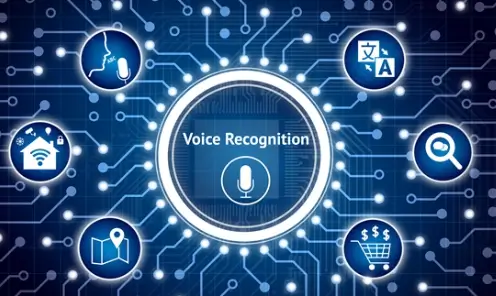
The rise of voice recognition is anchored in expanding enterprise data ecosystems and pervasive consumer adoption. Latency, privacy, and edge deployment shape ongoing architecture choices, while streaming inference and efficient models push real-time viability. Breakthroughs in voice alignment and data calibration translate research into scalable solutions with measurable SLAs and auditability. Real-world deployments demand accuracy and governance, creating a clear path for bias dashboards and risk-informed adoption as voice interfaces enter more daily workflows. The implications for volume, trust, and governance are substantial.
What Is Driving the Rise of Voice Recognition
The rise of voice recognition is driven by a convergence of user demand, technical advances, and ecosystem investments. Enterprises leverage scalable voice datasets to train models, while consumer adoption widens data sources and use cases. Competitive focus centers on latency challenges, where edge deployment and streaming inference reduce delay. Returns hinge on accuracy, reliability, and transparent data governance.
Breakthroughs Powering Modern Voice Tech
Progressive gains hinge on voice alignment and robust data calibration, aligning conversational intent with safety constraints and accuracy benchmarks.
Industry players pursue scalable architectures, curated datasets, and continuous evaluation, translating research breakthroughs into reliable, enterprise-grade, user-centric speech solutions across sectors.
Real-World Uses and User Expectations
Real-world deployments of voice technology increasingly intersect with daily workflows and consumer routines, as enterprises balance precision, latency, and privacy to meet measurable performance targets.
Organizations report consistent accuracy gains and user satisfaction when systems align with defined service levels and governance.
Ethical dashboards enable ongoing bias mitigation, tracking outcomes and iteration.
Data-driven assessments inform deployment scales and expectations for reliable, autonomous operation.
The Future of Spoken Interfaces and Privacy Considerations
What will define the next decade of spoken interfaces is a balance between seamless user experiences and robust privacy safeguards, as industry players anticipate advances in edge processing, multilingual capabilities, and contextual awareness.
The future signals tighter privacy tradeoffs and clearer consent best practices, with data minimization and transparent controls guiding deployment, while independent audits and standardized benchmarks inform risk-informed adoption and user empowerment.
See also: The Rise of Zero Trust Security
Frequently Asked Questions
How Accurate Is Voice Recognition on Noisy Days?
Voice recognition accuracy on noisy days varies by system, but generally declines; recent studies show modest gains in accuracy benchmarks and noise robustness due to adaptive filtering, multi-mic arrays, and robust acoustic models, enabling freer, data-driven industry applications.
Which Languages Have the Best Support Now?
“Generally, English, Mandarin, Spanish, and Arabic offer the strongest support. Overall languages coverage remains uneven, with robust regional dialects in major tongues while many minority languages lag behind.”
Can Voice Tech Replace Keyboards Entirely?
Voice tech cannot fully replace keyboards yet; current data show residual typing needs. The debate: keyboards may persist for accuracy, speed, and editing. Still, future: voice tech could dominate drafting, with keyboards shrinking to specialized, hybrid workflows.
Do Voices Reveal Personal Identity or Bias?
Voices reveal identity and can expose bias in voice systems; data show demographic fingerprints influence recognition accuracy, while adversarial cues may skew outcomes. Industry analysis notes privacy trade-offs and the need for transparent, equitable model governance and auditing.
How Affordable Are Enterprise Voice Solutions Today?
A hypothetical mid-market retailer cuts costs with affordable deployment of an enterprise voice solution, demonstrating scalable savings. Enterprise pricing varies, but overall trends show competitive tiers, lower total cost of ownership, and rapid ROI across industries, including healthcare and finance.
Conclusion
The data signals a sustained, data-intensive trajectory for voice recognition, underpinned by scalable architectures, edge inference, and rigorous governance. Breakthroughs in alignment and calibration are translating research into enterprise-grade outcomes, with measurable SLAs, bias dashboards, and audits guiding risk-aware adoption. Real-world deployments meet rising latency and privacy expectations while expanding use cases across devices. In this landscape, voice interfaces are poised to become as ubiquitous as keyboards, delivering transformative efficiency—yes, a language revolution, on a breathless scale.
